The AI Tax: How Silicon Scarcity is Colliding with the ‘GTA 6’ Super Cycle
In 'Zoran's Update', experienced games manager Zoran Roso comments on current industry topics on LinkedIn. GamesMarkt is republishing the update with his consent. This time's topic: The impact of the AI boom on console pricing (options) and what this could mean for game development and publishing.
While the consumer market fixates on the impending release of Rockstar’s magnum opus, a silent but seismic crisis in the global semiconductor supply chain is threatening to derail the hardware adoption curve that publishers rely on. As the insatiable appetite for AI infrastructure cannibalizes global foundry capacity, the video game industry faces an unprecedented scenario: a generation-defining software launch colliding with a hardware market where "mid-cycle price drops" have been replaced by "mid-cycle inflation."
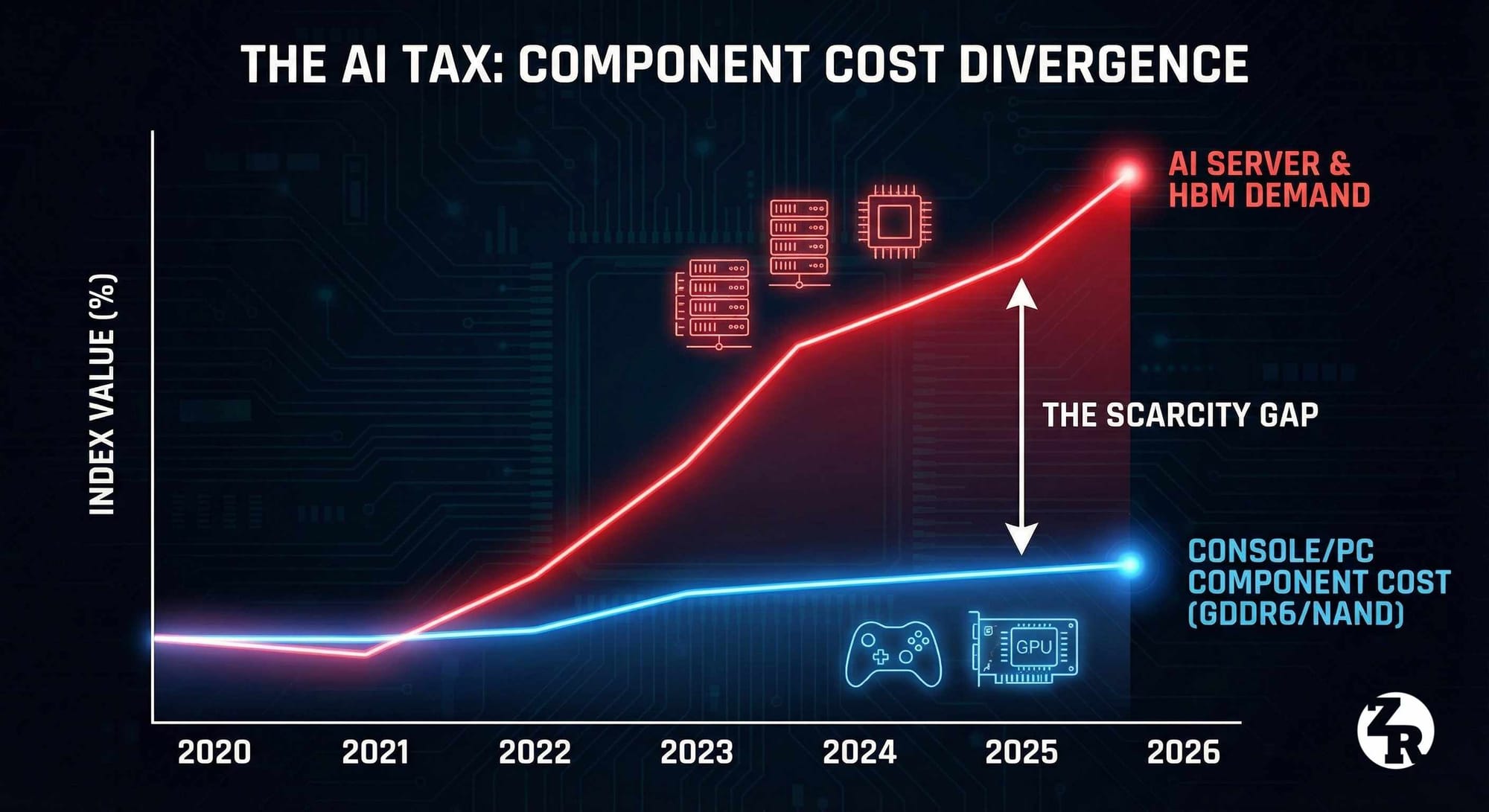
To understand the gravity of the situation, we must look upstream to the wafer fabrication level. For the past two decades, the console business model was predicated on a reliable deflationary curve: yields improved, component costs fell, and platform holders could introduce "Slim" models or price cuts to capture the mass market just as the generation’s biggest titles arrived. We are now witnessing the death of that curve. The explosive demand for AI-capable servers—requiring massive amounts of High Bandwidth Memory (HBM) and enterprise-grade SSDs—has monopolized production lines at TSMC and Samsung. While consoles don't use HBM, they compete for the same finite raw wafer allocation and packaging capacity. The result is a "crowding out" effect where the cost of manufacturing standard GDDR6 memory and NAND flash remains stubbornly high, making the traditional $299 or $399 mass-market entry point a mathematical impossibility for current-gen hardware.
This supply-side constriction places the Grand Theft Auto VI "Super Cycle" in a precarious strategic position. The prevailing industry thesis held that millions of "late adopters"—those currently satisfied with a PS4 or a GTX 10-series PC—would flood into the current generation specifically for this game. However, if the hardware "entry fee" remains gated behind a $500–$700 or more price tag due to the "AI Tax," that conversion funnel narrows drastically. We risk seeing a muted hardware spike where the addressable market for the highest-fidelity version of GTA 6 is significantly smaller than anticipated, forcing Take-Two and platform holders to rely on a longer, stickier cross-gen tail than they would prefer.
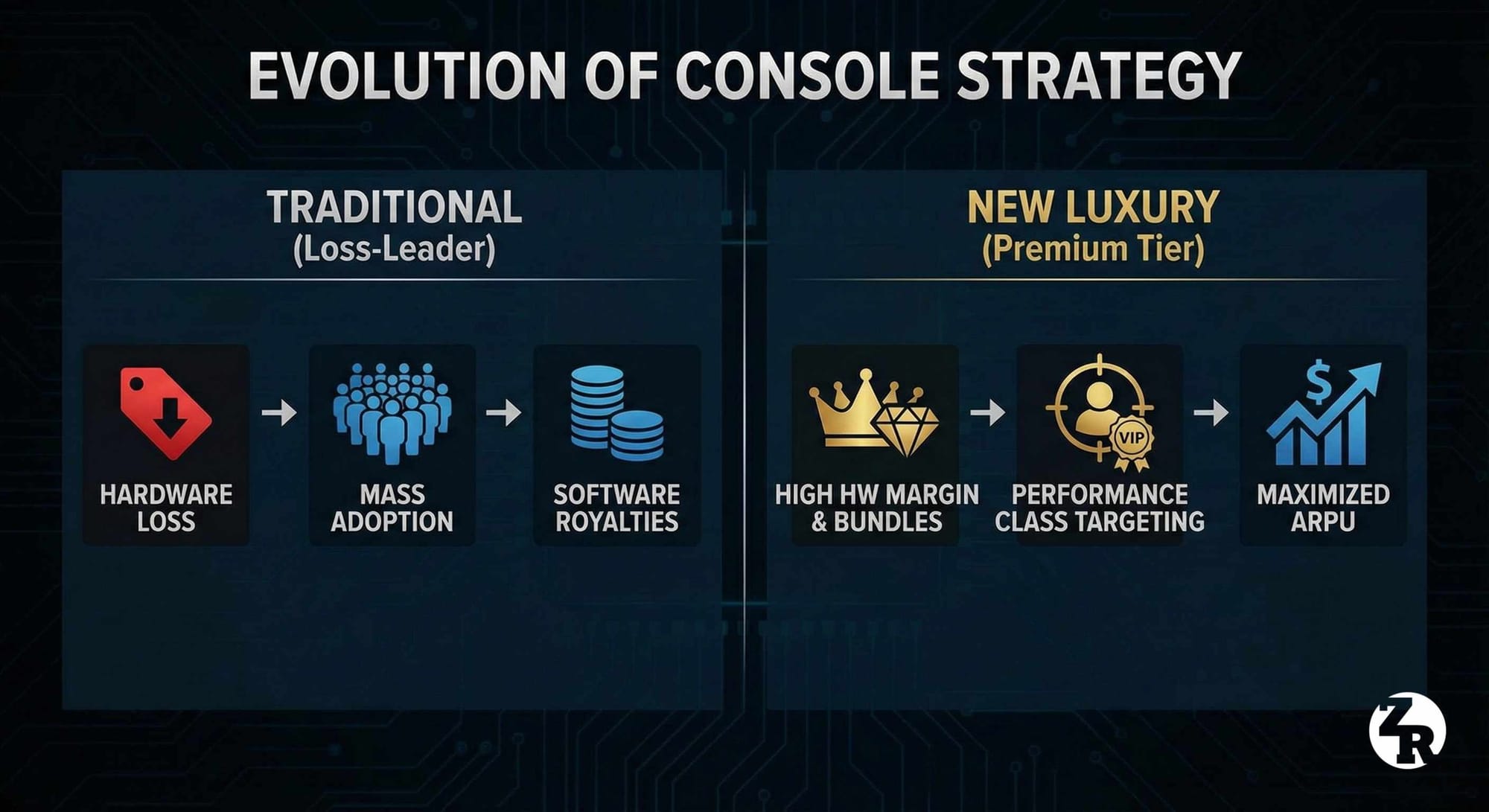
So what does this mean? We are already seeing a forced evolution in hardware marketing strategy, most visibly with the PS5 Pro. Unable to offer a "value" proposition, Sony must pivot to a "prestige" proposition. The marketing playbook is shifting from mass-market accessibility to "whale hunting." The PS5 Pro will likely be positioned not merely as an upgrade, but as a luxury lifestyle asset, decoupled from standard price-performance metrics. This is the "Apple Watch Ultra" strategy applied to gaming: codifying a "Performance Class" of users. The messaging will implicitly suggest that while the base hardware can run the game, only the luxury tier provides the intended experience, leveraging FOMO regarding ray tracing, crowd density, and load times. Should this happen, retail strategy will follow suit, prioritizing high-margin bundles with included services to obfuscate the raw unit cost, effectively abandoning the loss-leader model in favor of immediate profitability per unit.
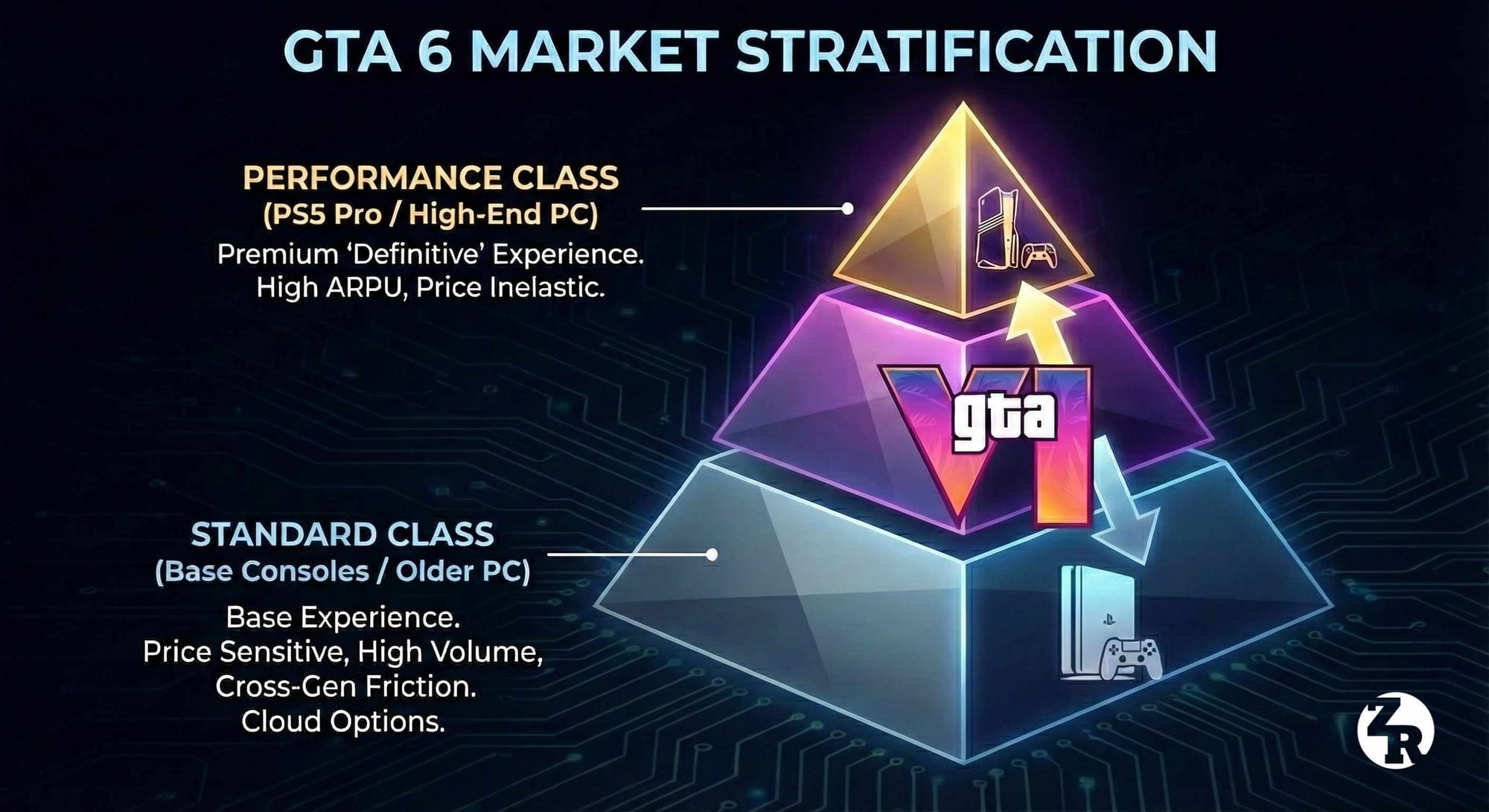
This dynamic could signal a permanent stratification of the gaming audience into two distinct economic tiers: a "Standard Class" served by legacy hardware and cloud options, and a "Performance Class" willing to pay a premium for local compute power. For publishers, this complicates the roadmap; future AAA development may need to account for a bifurcated user base where the "lowest common denominator" hardware hangs around much longer than technically desired, potentially breaking the pace of innovation for the rest of the decade.
About and contact to Zoran Roso
Zoran Roso stands as a highly influential veteran of the video game and entertainment industry, with a distinguished career spanning over 25 years in global publishing, marketing, and leadership roles. His professional journey includes serving in significant executive positions at some of the world's most recognizable gaming giants, including Rockstar Games/Take 2 Interactive, Activision Blizzard, and Sony PlayStation, where he was instrumental in the marketing and strategic positioning of flagship AAA franchises and brands. Most recently, he leveraged this extensive experience as the Global Publishing & Marketing Director at Tencent Games, a critical role focused on expanding the company's international reach and developing successful go-to-market strategies for its massive portfolio of internal and partner studios.
Now operating as the founder of ZR Consulting, Zoran continues to drive success in the industry by advising major global publishers and developers. His firm specializes in crafting winning strategies for international brand development, optimizing live service performance, and executing flawless launch plans across all major platforms, including console, PC, and mobile. An active figure in the global games community, his career is marked by a clear strategic vision and a successful track record in translating complex products into global commercial successes.
Zoran Roso, founder of ZR Consulting, brings 25+ years of global gaming marketing experience. Formerly Global Publishing/Marketing Director at Tencent Games, he has held leadership roles at Sony PlayStation, Activision Blizzard, and Rockstar Games.
Arthur Van Clap and Ivan Marchand, President (from Left to Right)
The University for Further Education Krems is closing the doors of their Center for Applied Game Studies. Center Lead Natalie Denk is looking to save projects like FROG otherwise. (Walter Skokanitsch / Denk)
The University for Further Education Krems is closing the doors of their Center for Applied Game Studies. Center Lead Natalie Denk is looking to save projects like FROG otherwise. (Walter Skokanitsch / Denk)